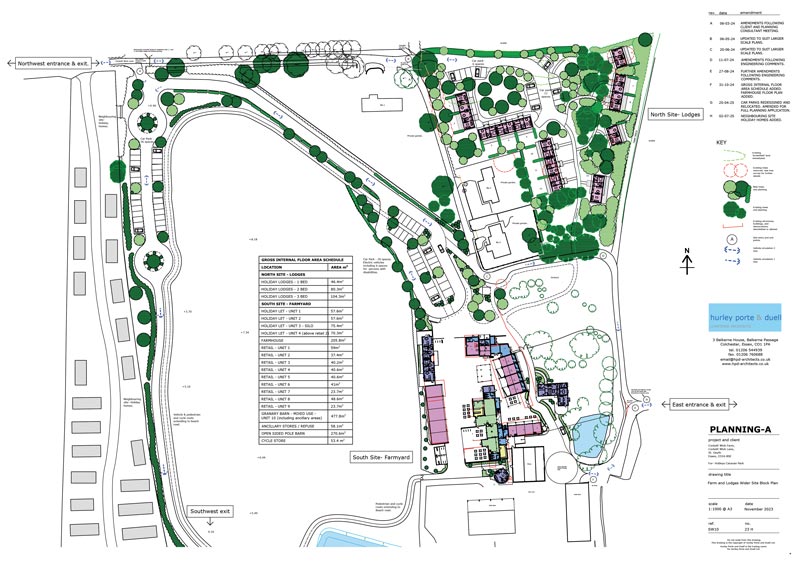
Proposed Design of Cockett Wick Farm

The proposals have been developed following consideration of site constraints and extensive site assessments.
The Site has many design constraints and considerations:
  • Isolated and exposed rural site in open countryside.
  • Access difficulties for increased movement created by the development
  • Derelict buildings no longer fit for purpose for modern farming
  • Listed buildings. Ecology and wildlife
  • Ecology and wildlife
  • Re-purposing heritage buildings and replacing others
  • Integration of existing residential use and ongoing farm use with the proposed uses
  • Edge of flood zone
  • Existing storage and workshop supporting the nearby Hutleys Caravan Park
  • A large complex project with many different challenge

The proposal seeks to create a rural visitor attraction to include provision of café/restaurant, farm shop, small artisan retail/commercial units and holiday lets.

Provision of 13 holiday lodges.

Creation of new access to Beach Road, parking, and provision of blue and green infrastructure
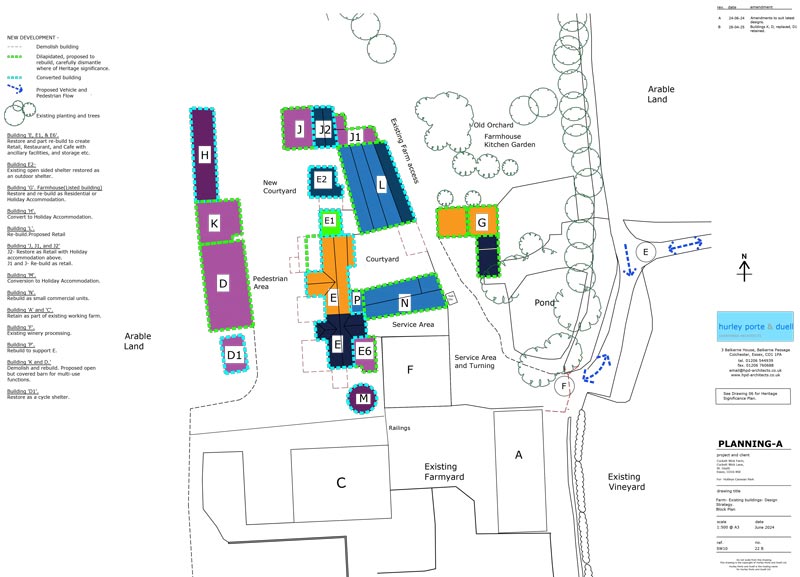
Wider Site Key Benefits

  • Regeneration of the site with mixed use, commercial including retail, and the new Winery
  • Tourism with daily visitors and longer holiday visitors/guests
  • Cultural benefits of a regenerated site where historic buildings become accessible to the public where previously, as a private farm, they were not
  • Improved transport to the site and connection to other local facilities, e.g., holiday park, local village and West Clacton
  • Restored listed buildings for future generations to enjoy
  • A staged/phased construction plan creating an educational project where the public can visit
  • New retail amenities and opportunities
  • Enhanced biodiversity and habitats for wildlife, with new trees, hedges, meadows, etc
  • Potential for renewable energy and regeneration
  • A new local asset generating employment and benefitting the local economy
  • Recognising the nearby flood risk and using the lower lying land for sustainable drainage and water retention solutions
  • Reducing vehicle movements and releasing building space by relocating the storage and workshop facilities to the nearby Hutley’s Caravan Park which they serve
  • Segregation provided between public and servicing areas. The northwest for public with a new one-way exit to the south and from the east for servicing entry and exit

Wider Site Key Design Principles

Access

Segregation provided between public and servicing areas. The North-West for public with a new one-way exit to the south and from the east for servicing entry and exit.

Character

The natural setting of the site and buildings and distant views of the farm from the south across the undulating and open landscape is maintained and enhanced by careful positioning of car parks aways from the farm buildings.

With vehicles and car parks kept away from the farm, the public areas can be fully pedestrianised.

Any impact on the historical character of the site is minimised by ensuring new buildings on the farm replace existing buildings using the same footprint. Drawing 22B.

Wherever possible existing buildings will be retained and restored and converted to ensure the historic farmstead character is still recognisable by visitors.

Natural habitats and Landscape

Access and car parking are concentrated in areas of low ecological value such as agricultural fields. New buildings are positioned to reduce tree loss as far as possible, and any new trees and hedging will reinforce and enhance the landscape and encourage wildlife.

Project Team

Boyer (Planning),
Hurley Porte & Duell (Architects),
Greenlight (Environment),
KMC (Transport),
Jane Blanchflower (Heritage),
Ingent (Drainage),
The Morton Partnership (Conservation
Engineer)

Contact Us

© Hutleys Caravan Park, Essex 2025
Website by Big Red Web Design